

Introduction to Arithmetic Circuits
Arithmetic circuits are a fundamental subclass of combinational digital circuits. Their main function is to perform mathematical operations on binary numbers.
The most common basic operations implemented are:
Half Adder: Circuit that adds two bits and produces a sum output

Full Adder: Adds three bits (two inputs and the carry from the previous stage). It is the basic block for constructing multi-bit adders by cascading.

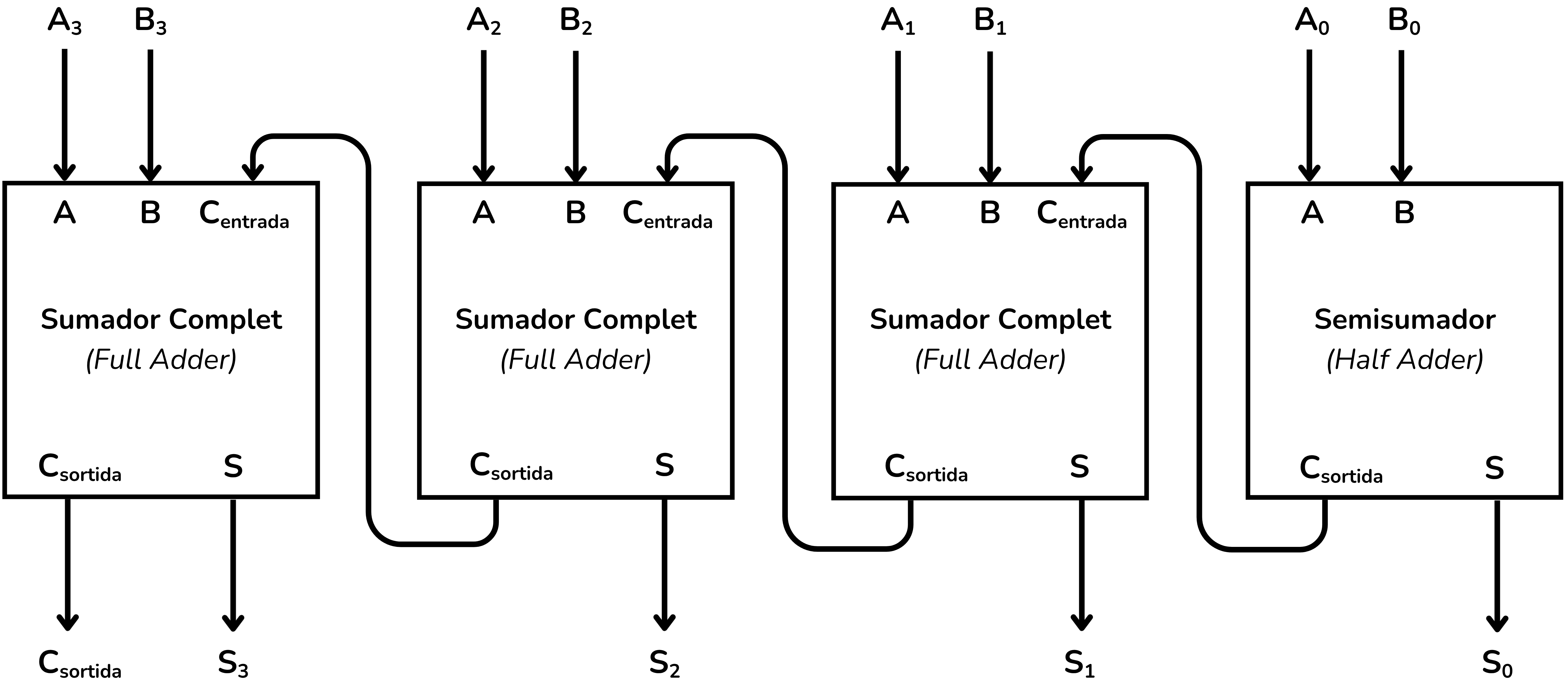
N-bit Adder: With half adders and full adders you can build adders of
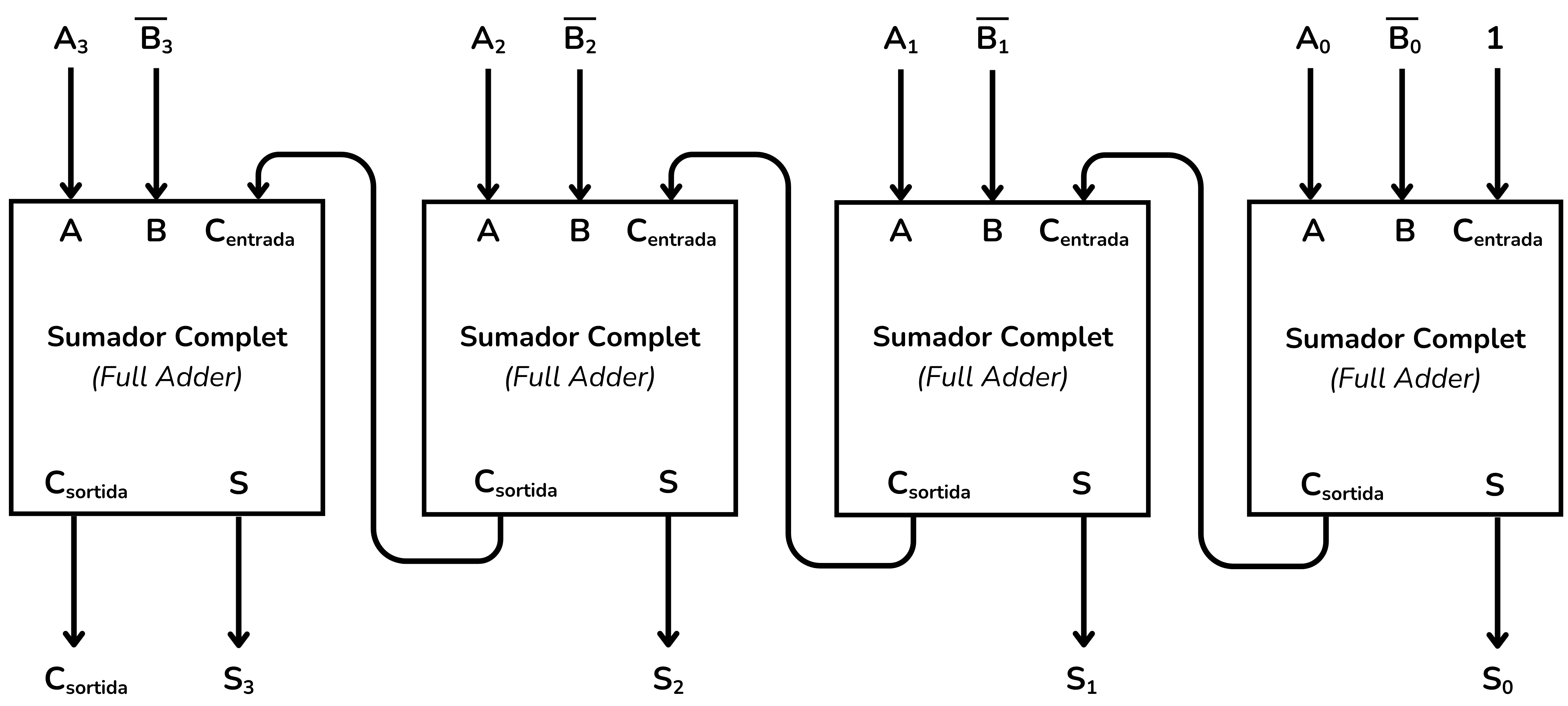
Subtractor: Binary subtraction is usually implemented using adders and the representation in two's complement. Thus, the subtraction
Comparators: Circuits that determine whether a binary number is greater, less or equal to another.

Multipliers and Dividers: More complex circuits that are implemented using algorithms based on repeated additions and shifts.

Arithmetic circuits form the core of the Arithmetic-Logic Units (ALU), the heart of any microprocessor. The ALU is responsible for executing both the arithmetic operations and the logical operations required for program execution.
The Arithmetic Logic Unit (ALU) is known in English as the ALU.

Contents of the Lesson
- In the topic Basic Circuits the half adder, the full adder and the comparators are presented.
- In the topic 4-bit Arithmetic incrementers, 4-bit adders and an ALU example are covered.
- In the topic n-bit Arithmetic incrementers, adders and comparators are generalised for
bits. - Finally, in the Miscellany topic more advanced exercises are gathered, such as multipliers, bit accumulators and sequential circuits and adders.



Xavier Casas, Francesc Madrid
Lliçons.jutge.org
© Universitat Politècnica de Catalunya, 2026